
Prevention
How to prevent wasp nests
You can't wasp-proof a garden completely, but a few simple steps in spring and early summer make your property far less attractive to nest-building queens.
Message us on WhatsApp for the fastest response. A photo is useful but not required — we have treated every nest type and location countless times.
Appointments available today
- 4.8 on Google
- Same-day appointments
- Fully insured
- Bee friendly
Best price
Quoted on the phone
Spring
Stop nests before they start
- Check lofts, sheds and outbuildings in April and May — a new nest is golf-ball size and easiest dealt with early
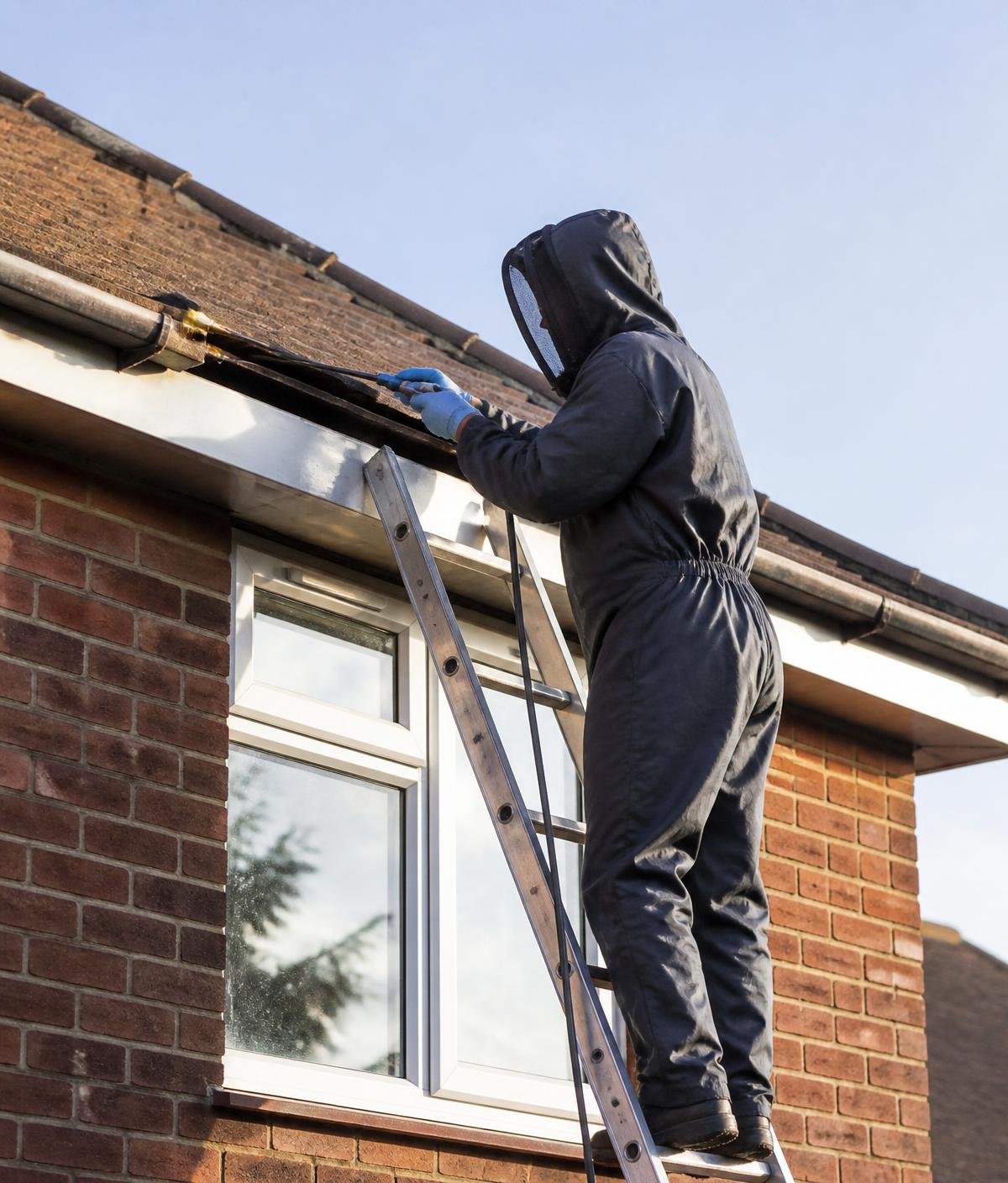
- Seal gaps around rooflines, soffits and air bricks where wasps entered in previous years
- Repair or replace damaged shed felt and keep outbuilding doors closing flush
- Fit fine mesh over wall vents and chimney pots if you've had nests there before
Summer
Make your garden less inviting
- Keep bins tightly lidded and rinse recycling — sweet residues attract foraging wasps
- Clear fallen fruit from under trees promptly in late summer
- Cover food and drinks outdoors, and check glasses before drinking
- Keep compost heaps turned and covered
A note on old nests and decoys
Wasps never reuse an old nest, so a treated or dead nest can be left in place — it acts as no invitation to new queens either way. Decoy nests can deter some species from building very nearby, but they're not reliable on their own; proofing entry points works better.
If you had a nest treated last year, the most effective prevention is sealing the entry point the colony used. We're happy to point out the likely access routes when we treat.
Nest active? Don't leave it.
Seen a small nest starting this spring? Early treatment is quick, fixed-price and stops a summer-long problem.
Call 01865 477311