
Understanding the colony
The wasp life cycle, month by month
One overwintered queen becomes a colony of thousands by August, then it's gone by winter. Here's exactly how that happens, and why timing changes everything about treatment.
Send a photo of the nest — fixed-price quote back in minutes, usually a same-day slot.
- 5.0 on Google
- Same-day service
- Fixed price from £99
- Free revisit guarantee
2,000+
Nests treated
Understanding what stage a wasp colony is at explains almost everything else on this site — why a nest found in May is a different job to the same species found in September, why treatment works the way it does, and why nests are never a permanent fixture even if left alone.
| Month | Colony stage | What's happening |
|---|---|---|
| March–April | Queen emergence | A single overwintered queen wakes from hibernation and searches for a nest site — a loft, eave, or wall cavity. |
| April–May | Founding | The queen builds the first paper cells alone and rears the first small batch of worker wasps unaided. |
| June | Worker take-over | The first workers take over foraging and nest-building; the queen's role narrows to laying eggs. |
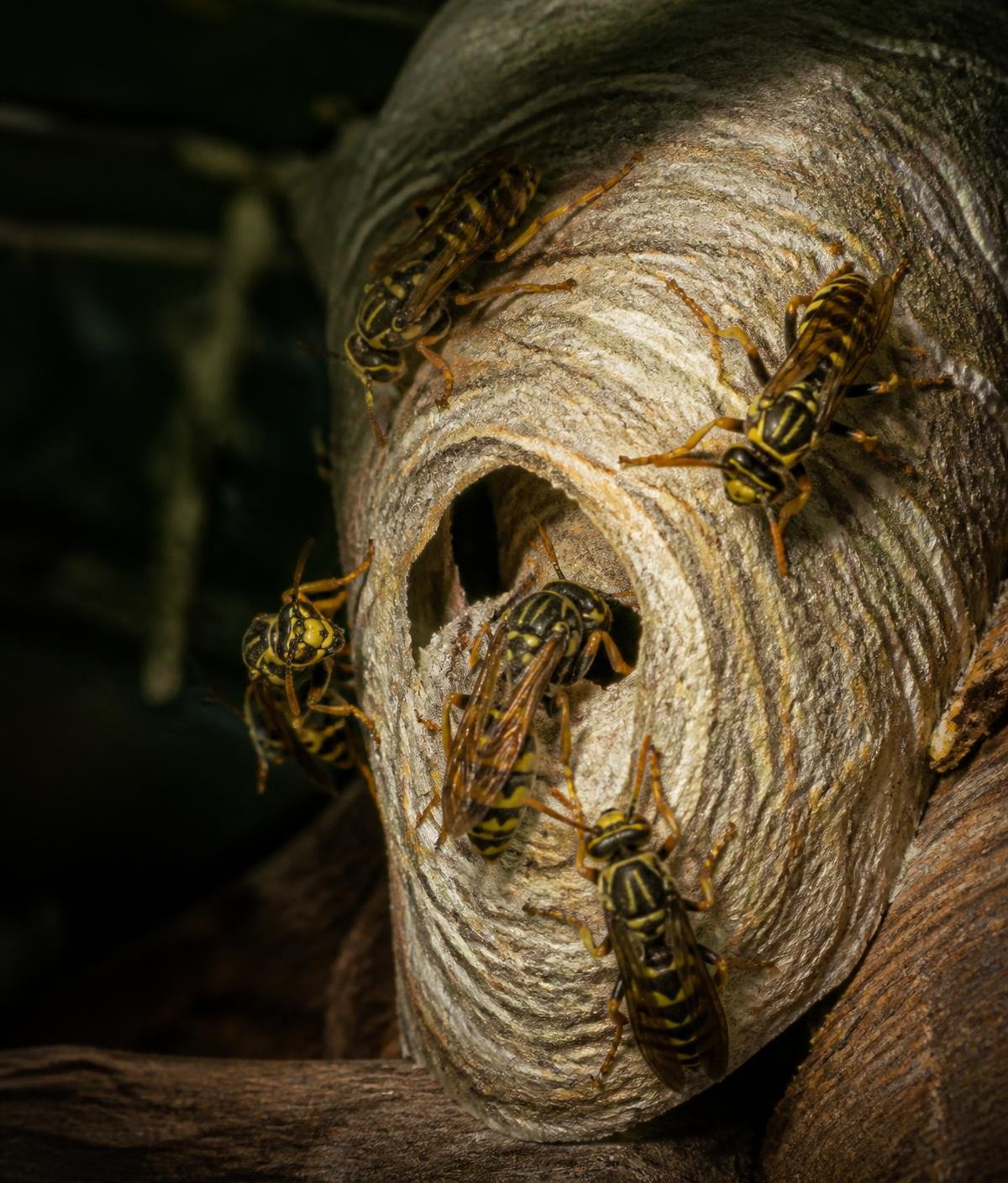
| July | Rapid expansion | Worker numbers climb sharply as the nest structure grows outward in concentric layers. |
| August | Colony peak | Nest reaches maximum size, often several thousand workers — the highest sting risk of the year. |
| September | Queens and drones | The colony produces new queens and males; workers, no longer fed by larvae, forage aggressively for sugar. |
| October | Decline | Old queen dies, workers die off, and the nest is permanently abandoned — see our guide on when wasps die off. |
| Winter | Dormancy | Only newly mated queens survive, hibernating individually ready to found next year's nests. |
Why the founding stage matters
Everything in a colony traces back to one queen. If she's killed or the nest is disturbed while she's still the only occupant, the colony collapses before it starts. That's part of why a nest spotted in April or May is the easiest and cheapest to deal with — there's no defensive worker force yet.
Why August nests are the ones we get called to most
By peak size, a nest is defended by thousands of workers responding fast to any vibration or disturbance near the entrance. This is the stage most home-owners in Oxford, Kidlington and Bicester discover a nest they didn't know was there all summer — usually after a hedge trim, a loft clearout, or simply noticing far more wasps around the bins than usual.
Treatment still works at peak size
A mature August nest is more daunting to look at, but it's still straightforward to treat professionally — the workers carry the treatment back into the nest themselves, taking out the whole colony.
The autumn generation: queens and drones
Late summer sees the colony switch effort to producing the next generation — new queens and male drones, whose sole purpose is mating before the drones die. This overlaps with the period when workers, deprived of larvae to feed, turn to human food sources — the source of every "drunken wasp near the bins" story you've heard.
- Spring nests: small, low-risk, cheapest to treat
- Summer nests: rapidly growing, moderate to high risk
- August nests: peak size, highest sting risk, still fully treatable
- Autumn nests: naturally declining, may not need treating at all
If you've found a nest and want to know whether the calendar means it's worth treating now, our seasonal die-off guide gives a clear steer, and our cost guide covers what treatment involves at any stage.
Frequently asked questions
- Where do wasp queens go in winter?
- A mated queen finds a sheltered spot — loft insulation, a woodpile, behind bark or render — and hibernates alone until temperatures rise reliably in spring.
- When does a wasp nest start each year?
- Typically April or May in Oxfordshire, when an overwintered queen emerges, finds a site, and begins building the first paper cells alone.
- How big does a wasp nest get?
- A mature nest by August can hold several thousand workers and be the size of a football or larger, depending on species and how undisturbed the location is.
- What are the new wasps in September different from workers?
- Late summer produces the next generation of queens and males (drones), whose only job is to mate before the males die off and the new queens seek somewhere to overwinter.
- Does treatment timing depend on the life cycle stage?
- Yes — treating early in the season is quicker and cheaper, while treating at peak size in August takes more care, and treating in October may not be worthwhile at all.
- Why do wasps seem more aggressive in late summer?
- Once the colony stops rearing larvae, workers lose their usual food source and switch to foraging aggressively for sugar, coinciding with new queens leaving the nest.
Related guides
We treat nests like this across Oxfordshire
Same-day wasp nest treatment from £99, including these areas:
Nest active? Don't leave it.
Whatever stage the nest is at, we can tell you over the phone whether it's worth treating now.
Call 01865 477311