
Guide · Where the nest is
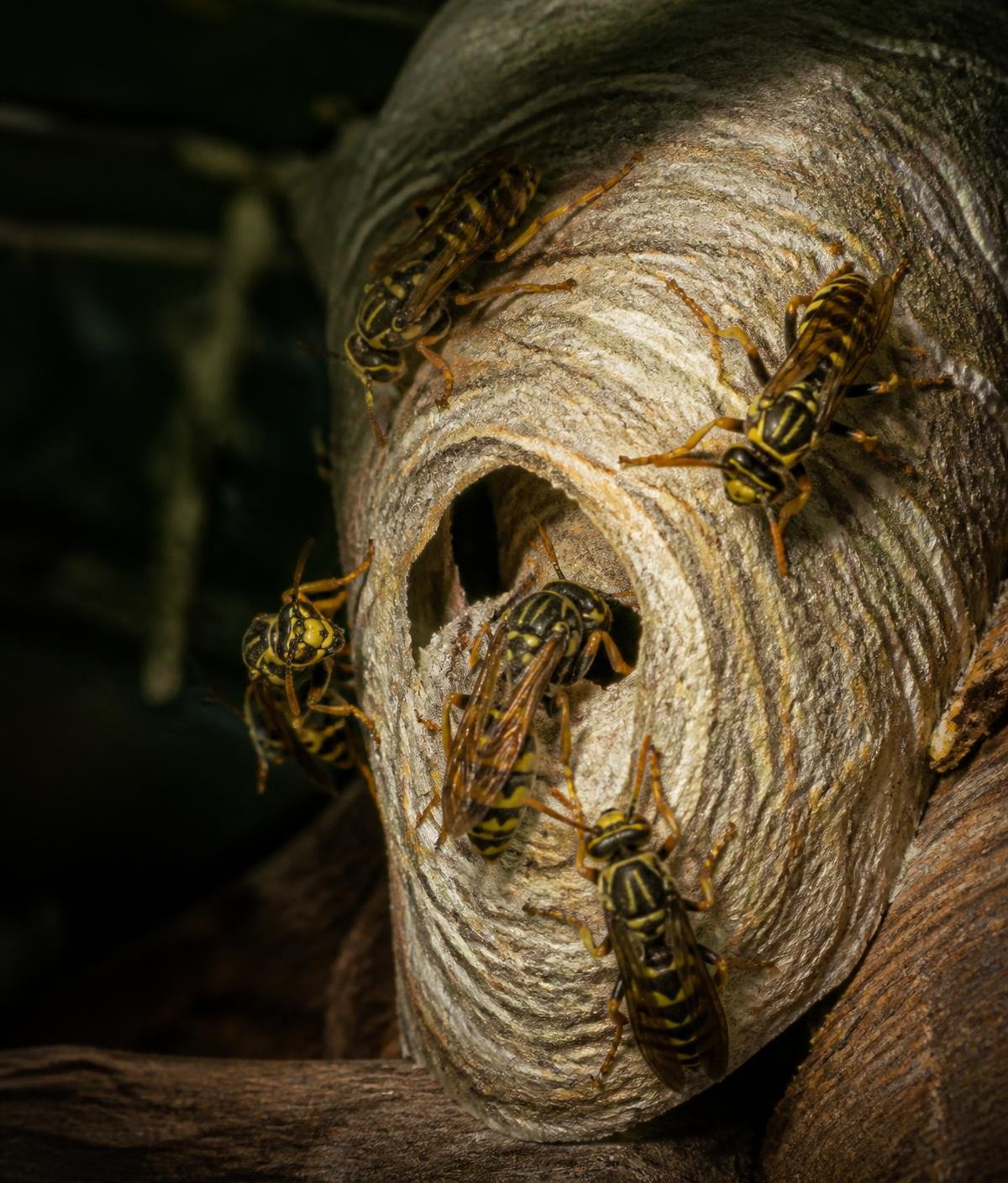
Wasp nest in the garden
From decking voids to compost bins, garden nests are the ones most likely to interrupt a barbecue, a game of football or an afternoon in a Kidlington or Wantage back garden.
Send a photo of the nest — fixed-price quote back in minutes, usually a same-day slot.
- 5.0 on Google
- Same-day service
- Fixed price from £99
- Free revisit guarantee
2,000+
Nests treated
A garden gives a wasp queen more hiding places than most people realise. Unlike a loft or a chimney, which is one obvious cavity, an Oxfordshire back garden might have a dozen candidate nest sites — decking, a dry stone or brick wall, a dense hedge, a compost heap, an unused bird box, the eaves of a shed — and the wasps only need one that goes unnoticed until July.
The garden hotspots we treat most often
Decking voids are consistently the most common garden nest we treat between May and August. The gap beneath raised decking boards is dark, dry and undisturbed for months at a time, and a nest can grow to a significant size before anyone notices wasps flying in and out at a gap by the skirting board of the decking or where it meets the house.
Hedges and dense shrubs — particularly mature leylandii, beech and box hedging common in older Oxford gardens — can hide a nest built into the woody centre, invisible from outside until the hedge is trimmed or the flight path is noticed on a still evening.
Compost bins and log piles offer warmth and shelter that suits a nest well, and are often disturbed suddenly when someone lifts a lid or moves logs for the fire, with little warning beforehand.
Bird boxes left unused after nesting birds have fledged are a near-perfect ready-made cavity, and garden walls — especially older dry stone or lime-mortared Cotswold stone boundary walls — often have natural gaps between stones that a queen exploits in the same way she would a brick airbrick.
Barbecue and picnic season overlaps exactly with peak nest size
Late July through September is when garden nests are largest and most active — and also when Oxfordshire gardens see the most barbecues, picnics and outdoor drinks. If you are planning to host, it is worth checking known nest spots (decking edges, hedge bases, compost bins) a few days beforehand rather than discovering a problem mid-event.Why garden nests cause more day-to-day stings
A nest tucked away in a loft rarely meets a person unless someone goes up there. A garden nest sits directly in the path of everyday life — children playing, dogs running past, someone mowing, a hosepipe left near the decking. This is a large part of why garden nests generate more sting call-outs in our experience than nests hidden away in a roof space, even though the roof nest may in fact be larger.
Most common garden site
Under raised decking, at the join with the house wall
Peak season for garden call-outs
Late July to September
Riskiest activity nearby
Strimming, hedge trimming, lifting compost lids
Treatment disruption to garden
None to beds or lawn — targeted at the nest entrance only
What to do before we arrive
Keep children and pets away from the identified area, pause any strimming, hedge cutting or decking work nearby, and avoid lifting compost lids or moving logs near the entrance. There is no need to cover ponds, beds or vegetable patches — treatment is applied directly to the nest itself, not sprayed across the garden.
- Fixed price from £99 for garden nests, agreed before we attend
- Same-day appointments across Oxford, Abingdon, Banbury, Bicester, Witney and Didcot
- Targeted treatment — no broad spraying of lawns, beds or ponds
- Free revisit guarantee if activity continues
If the nest turns out to be underground rather than in decking or a hedge, our dedicated guide to underground wasp nests covers that specific risk, and if you are not yet sure what you are looking at, signs of a nest and bee or wasp will help you confirm before calling.
Frequently asked questions
- Why has a nest appeared under our decking this year?
- Decking voids are dry, dark, sheltered from rain, and rarely disturbed once the boards are down — very similar conditions to a hollow tree stump, which is a wasp queen's natural first choice. A gap where the decking meets the house wall or a raised planter is a common entrance point.
- Is it safe to trim a hedge that has a nest in it?
- Not once the nest is established. Strimmers and hedge trimmers create noise and vibration that wasps read as an attack, and a nest built into the dense centre of a hedge is easy to disturb without ever seeing it. Stop trimming and check the hedge for flight activity before continuing.
- We found a nest in an old bird box — should we remove the box?
- Leave the box alone until the nest has been treated. Bird boxes with a single small entrance hole are a favourite for wasps for the same reason birds like them, and prising the box open while active is a fast way to get stung repeatedly.
- Can wasps really nest inside a compost bin?
- Yes, particularly plastic compost bins and log-built compost bays, where the warmth of decomposition combined with a sheltered cavity suits a nest well. It is often only noticed when someone lifts the lid to add kitchen waste.
- Do garden nests cause more stings than house nests?
- In our experience, yes, simply because gardens see more casual traffic in summer — barbecues, football, sitting out with a drink — all activity that a nest a few metres away will react to far more than an occupant walking past a loft nest indoors.
- Will treating a garden nest harm my plants or pond?
- No. Treatment is targeted directly at the nest entrance rather than sprayed broadly, so beds, ponds and vegetable patches nearby are not affected. We will tell you if there's anything worth moving or covering before we start.
Related guides
We treat nests like this across Oxfordshire
Same-day wasp nest treatment from £99, including these areas:
Nest active? Don't leave it.
Nest under the decking, in a hedge or near the compost bin? Get it treated before the next barbecue — same-day appointments available.
Call 01865 477311