
Guide · Where the nest is
Wasp nest in an air brick or vent
A ground-level nest behind an air brick, dryer vent or extractor outlet is one of the highest-risk locations we treat — right at the height children and pets pass every day.
Send a photo of the nest — fixed-price quote back in minutes, usually a same-day slot.
- 5.0 on Google
- Same-day service
- Fixed price from £99
- Free revisit guarantee
2,000+
Nests treated
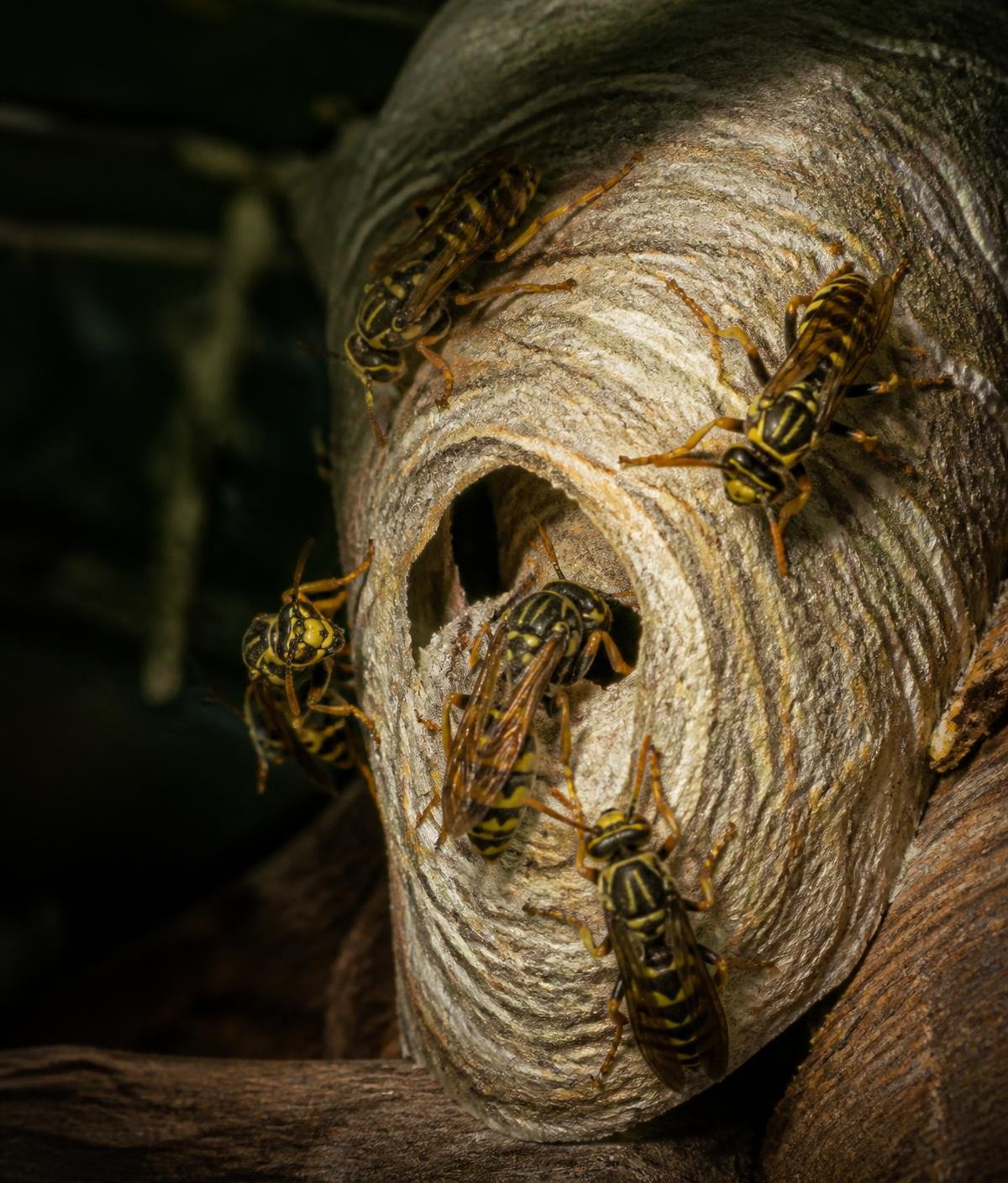
Air bricks exist to ventilate the void beneath a suspended timber floor, keeping damp and rot at bay. That same void — dry, dark, sheltered from wind and rain, with a ready-made entrance hole — is also close to the perfect nest site for a young wasp queen in spring. By midsummer the nest can be well established behind the brick, with a visible line of wasps flying in and out at a height most people would put their hand or a dog's nose.
We see the same pattern with white plastic wall vents for tumble dryers and kitchen extractor fans, particularly on 1930s-70s housing across Botley, Kidlington and Didcot where these vents sit low on the wall, and on newer Bicester estates where combi dryer vents are often within reach of a toddler or a curious dog.
Never block the vent — why it makes things worse
It is a natural instinct: seal the hole, keep the wasps in. In practice this rarely works and often backfires badly. Wasps confined behind a blocked air brick do not simply die off quietly. They search the void for another way out, and a suspended timber floor void frequently connects, via gaps around pipework or skirting, directly into the house. We have attended jobs where a DIY-blocked air brick led to wasps emerging through a bedroom skirting board days later.
Blocked vents cause indoor emergences
If an air brick or vent has already been sealed with expanding foam, tape or a brick before we arrive, tell us when you call. It changes how we assess where the colony may now be trying to exit, and whether there is a risk of wasps appearing indoors.Why ground level changes the risk calculation
A nest under roof tiles or in a loft is several metres above head height and rarely disturbed by accident. A nest behind an air brick sits at exactly the height of a child's face when they crouch to look at something in the garden, or a dog's nose sniffing along a wall. Defensive stinging incidents from low-level nests disproportionately involve children and pets for this reason, which is why we treat these as priority same-day jobs wherever we can.
| Situation | The problem | Our approach |
|---|---|---|
| Airbrick sealed with foam or a brick | Wasps search for another exit, sometimes into the house | Assess indoor connection points before treating, avoid trapping wasps inside walls |
| Tumble dryer vent nest | Ducting can carry wasps or treatment closer to the appliance | Treat at the external opening, avoiding the internal hose run |
| Nest beneath a bay window void | Void often runs the width of the window, hard to judge extent | Treat the entry point and monitor for a second point of activity |
| Nest near a play area or dog run | High contact risk for children and pets at ground level | Prioritised same-day appointment where possible |
What treatment involves
We apply an insecticidal treatment at the air brick or vent opening, timed for when foraging activity is lower, so the returning workforce carries it back into the void over the following hours and days. The vent itself is left in place and functioning — we do not recommend permanently blocking ventilation once the nest has died out, as the void still needs air movement to stay dry.
If you are unsure whether what you are looking at is a wasp nest or simply a bee or fly nesting in the same spot, our guide to telling a bee from a wasp is worth a quick check first, and signs of a nest covers what a genuine air brick nest looks and sounds like from outside.
For nests found elsewhere at ground level, see our guide to underground wasp nests, and if the vent sits on a listed or period property, our page on wasps in listed and thatched buildings covers the extra care needed around original brickwork.
Frequently asked questions
- Why have wasps built a nest behind my air brick?
- Underfloor voids and subfloor cavities behind air bricks are dry, dark, and ventilated but sheltered — close to ideal conditions for a nest. The airbrick itself is not the nest; it is simply the gap the wasps use to get in and out of a void behind it, often a suspended timber floor void or the cavity beneath a bay window.
- Can I just push something into the brick to block them out?
- No — this is the single most common mistake we see with air brick nests. Blocking the only way out traps wasps that then look for the next weakest point, which is very often inside the building, through a skirting gap or floorboard joint.
- The vent is for my tumble dryer or extractor fan — does that make it worse?
- It changes the approach rather than making it worse. We need to treat without damaging the ducting or trapping wasps inside a vent hose that leads indoors, so we identify exactly where the void behind the vent connects before treating.
- Is a low-level nest more dangerous for children and pets?
- Yes, proximity matters. A nest at skirting height around an air brick is directly in the path of children playing near a wall, a dog investigating a hole, or anyone kneeling to garden nearby, all at exactly wasp height rather than several metres overhead like a roofline nest.
- Will you need to remove the air brick?
- Usually not. Treatment is applied at the vent opening and, where the void is accessible, a little further in. The brick itself normally stays in place and continues working as ventilation once the colony has died down.
- How quickly can you come out for a ground-level nest near a vent?
- Same-day appointments are available across Oxfordshire in most cases, and we treat low-level air brick nests as a priority given the sting risk to children and pets at ground level.
Related guides
We treat nests like this across Oxfordshire
Same-day wasp nest treatment from £99, including these areas:
Nest active? Don't leave it.
Wasps at a ground-level vent or air brick? Don't block it — call us for a same-day, fixed-price treatment.
Call 01865 477311