
Where the nest is: wall cavity
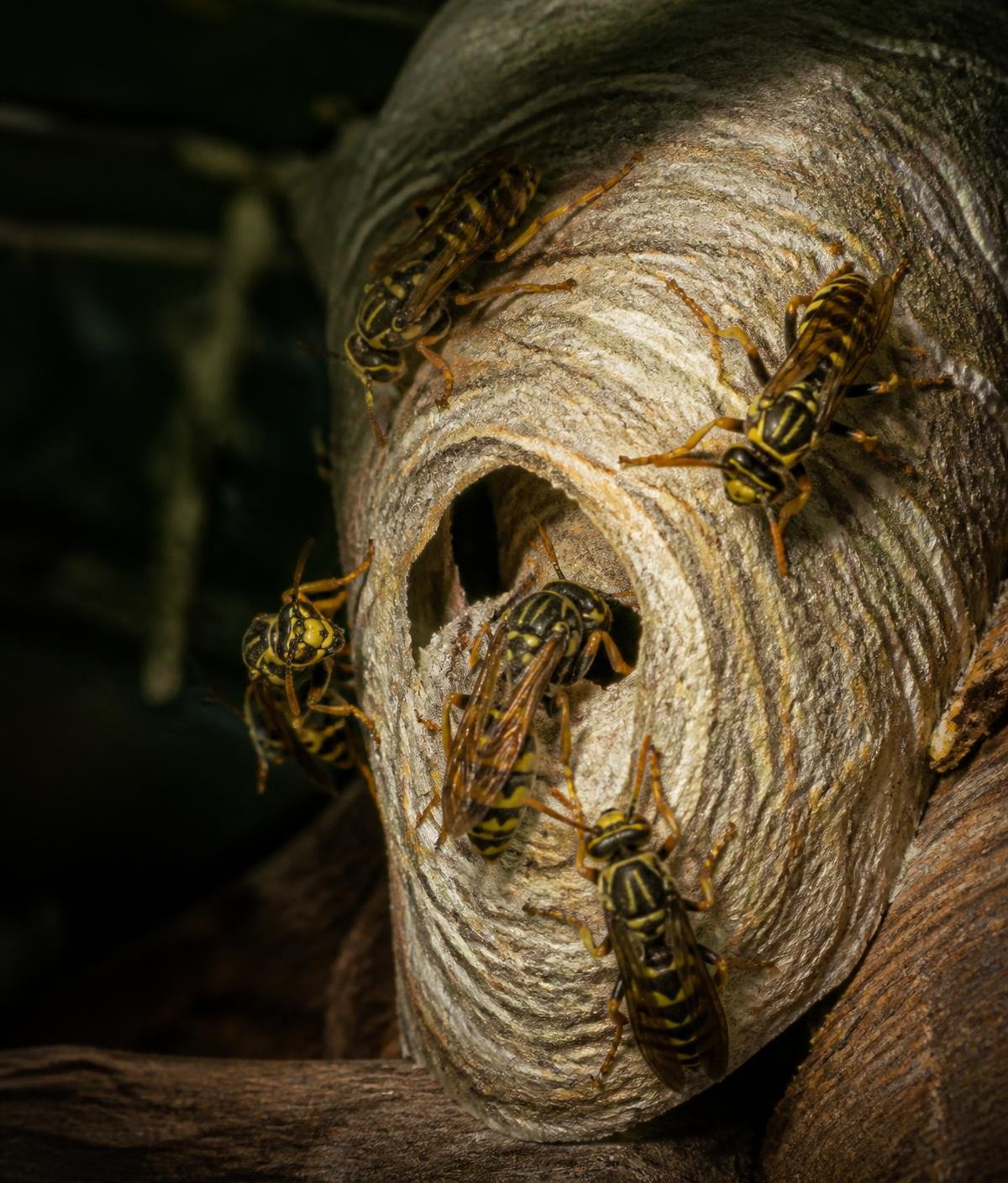
Wasp nest in a wall cavity
A cavity wall nest is one of the less obvious ones to spot from the garden, but the tell-tale signs — an airbrick with steady traffic, a buzzing felt through an inside wall — are unmistakable once you know what you're looking for.
Send a photo of the nest — fixed-price quote back in minutes, usually a same-day slot.
- 5.0 on Google
- Same-day service
- Fixed price from £99
- Free revisit guarantee
2,000+
Nests treated
Most Oxfordshire houses built from the 1930s onward have cavity walls: two skins of masonry with a gap between them, originally left simply for damp control and, in many properties, later filled with insulation. That cavity is dry, dark, sheltered from wind and rain, and almost entirely undisturbed for years at a time — which makes it just as attractive to a founding queen wasp as a loft void, provided she can find a way in.
The three entry routes worth knowing
An airbrick is the most obvious route: a grille-fronted vent, usually near ground level, put there to ventilate an underfloor space or the base of a cavity. A weep vent is smaller and easy to miss — a small gap or plastic tube left in a mortar joint just above a window or door lintel, designed to let any moisture that collects in the cavity drain back out. And a perp joint is simply a vertical mortar joint between bricks that's been left open rather than filled, sometimes deliberately for ventilation, sometimes just from a repointing job that missed a gap. Wasps use all three routes into the cavity, and once inside they'll build wherever there's space, sometimes low down near the airbrick and sometimes rising higher within the cavity itself.
Common entry points
Airbricks, weep vents above windows/doors, open perp joints
What it sounds like
A dull, steady buzz felt through an internal wall rather than a ceiling
Insulated cavities
Nest can sit within or against existing cavity wall insulation
Do not block the vent
Airbricks and weep vents serve a structural/damp purpose
When a nest is behind plaster
Occasionally the buzzing is loudest against an internal wall rather than felt anywhere near a window or airbrick outside, which understandably worries people — it can sound like the nest is essentially in the room with you. In most cases it isn't: the nest is still in the cavity between the two skins of the wall, and the plaster and inner brick skin are simply carrying the sound through. It's genuinely rare for a nest to break through into a living space, and treatment from the external entry point, exactly as with an airbrick or weep vent nest, resolves it without any need to open up plasterwork.
Why sealing the vent yourself is the wrong first move
The instinct to silicone over an airbrick or stuff a weep vent with wire wool the moment you spot wasps is understandable, but it causes the same problem as sealing any other active entry point: trapped wasps look for another way out, and airbricks in particular exist to manage damp and ventilation, so blocking one long-term can cause its own issues in an underfloor void. Treat first, confirm the nest is dead, then fit a proper mesh vent cover rather than a permanent seal — details on our prevention page.
How we treat a cavity wall nest
We apply insecticidal dust directly through the airbrick, weep vent or perp joint being used, which returning wasps carry back into the nest inside the cavity. There's no need to drill or open the wall itself in the vast majority of cases. If you're also getting activity from a soffit or roofline on the same wall, it's worth checking whether it's actually a separate nest — see our soffits and fascias guide — since cavity and eaves nests can occasionally coexist on an older property.
If you're not sure yet whether what you're hearing is coming from a wall cavity, a loft, or somewhere else entirely, our general signs of a nest guide will help you narrow it down before you call, and our treatment page covers the method itself in more detail.
Frequently asked questions
- What's the difference between an airbrick and a weep vent?
- An airbrick is a larger, purpose-made vent (often with a decorative grille pattern) that ventilates an underfloor void or cavity. A weep vent is much smaller — usually a small open or tubed gap left in a mortar joint above a window or door to let moisture drain out of the cavity. Both are large enough for a wasp to use as an entry point.
- How do I know the nest is in the cavity and not somewhere else?
- Wasps flying in and out of an airbrick, a weep vent, or an open vertical mortar joint (a perp joint) at a consistent, repeated point in the brickwork is the main clue. A dull buzzing felt through an inside wall, rather than a ceiling, also points to a cavity nest rather than a loft or soffit one.
- Can a cavity wall nest affect the insulation in the wall?
- If the property has cavity wall insulation, an established nest can sit within or against it, and old nest material left in the cavity after the colony dies can very occasionally affect the insulation locally. This is worth mentioning if you're planning any cavity wall work afterwards.
- Is it worse if the nest is behind plaster inside the house?
- It's more distressing than dangerous in most cases — nests sitting in a cavity behind an internal wall are usually treated the same way, from the external airbrick or weep vent, without any need to break into plasterwork.
- Will blocking the airbrick afterwards cause damp problems?
- Yes, potentially — airbricks and weep vents exist for a structural reason, so we don't recommend permanently blocking them. Once the nest is confirmed dead, a vent-compatible mesh cover is a better fix than sealing the gap outright.
- Does this happen more in older or newer Oxfordshire houses?
- We see it in both. Victorian solid-wall terraces with airbricks for underfloor ventilation and 1930s-70s cavity wall housing with weep vents and perp joints are both common candidates, just via slightly different routes into the wall.
Related guides
We treat nests like this across Oxfordshire
Same-day wasp nest treatment from £99, including these areas:
Nest active? Don't leave it.
Wasps using an airbrick or weep vent? We treat cavity wall nests without opening up brickwork, from £99.
Call 01865 477311